Natural woodfibre softboard is a high-performance, eco-friendly timber product that plays a vital role in modern construction, design, and sustainability. Discover the benefits of wood fibreboard and how it supports a sustainable future through renewable resources, energy efficiency, and recyclability.
Renewable Resource
Our softboards are made from natural wood fibres, a renewable resource from sustainably managed forests, ensuring effective resource replenishment.
Environmentally Friendly
Wood fibreboard uses natural lignin as a binder, eliminating synthetic chemicals and reducing environmental impact.
Reducing Overall CO2
By incorporating woodfibre board solutions into their value chain, industries will reduce their products’ CO2 footprint.
how its made
Raw material preparation
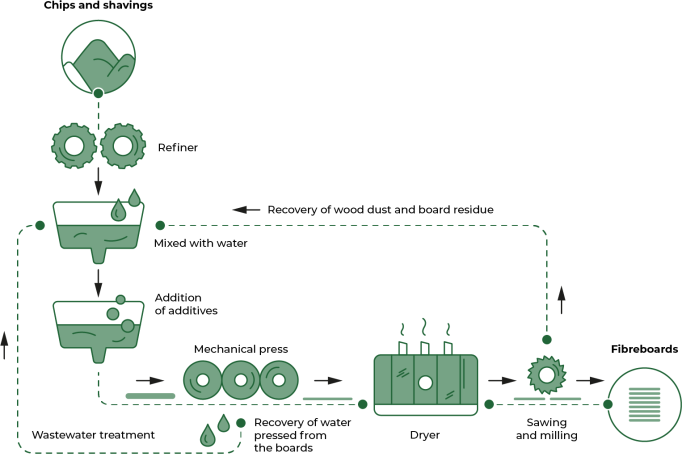
Wood chips or fibres are initially processed to break them down into smaller components. This is done through mechanical and chemical methods, ensuring the fibres are of consistent size and quality.
how its made
Fibre extraction
The wood fibres are separated from the lignin and other non-fibrous components. This can involve mechanical or chemical pulping methods, depending on the desired properties of the final product.
how its made
Wet process forming
The extracted fibres are mixed with water to create a slurry. This wet process allows the fibers to be evenly distributed and helps in forming the board.
.
how its made
Natural binding
During the drying and pressing stages, the natural lignin present in the wood acts as a binding agent. This means no additional chemicals or adhesives are used, resulting in a more natural and environmentally friendly product.
how its made
Pressing and finishing
The wet fibre slurry is formed into mats or boards and then compressed under high pressure and temperature. This step consolidates the fibres into a solid, uniform sheet, which is then cut, sanded, and finished as needed.
Advantages of Wood Fibreboard
Thermal performance and heat storage
The air held within a low-density fibre structure gives wood fibreboard useful thermal resistance. Wood fibre also stores heat, which can help complete building assemblies moderate temperature changes. Declared thermal conductivity and resistance depend on the exact product and thickness, while real building performance also depends on continuity, thermal bridges and airtightness.
Acoustic comfort
The porous structure can absorb and dissipate sound energy. In floors it may contribute to impact-sound reduction; in walls, ceilings and interior products it can support absorption and reduced reflection.
Vapour openness and moisture buffering
Wood fibre is hygroscopic, meaning it can absorb and release moisture as surrounding conditions change. Softboard can therefore support vapour-open, moisture-aware construction when used in a correctly designed build-up. It does not prevent leaks or mould by itself, and it does not replace weather protection, airtightness, ventilation or hygrothermal design.
Low weight and processability
Compared with denser panel types, softboard is lightweight and easy to cut or convert. This supports efficient handling in construction and gives industrial customers a base for shaping, perforating, laminating or finishing. Processing trials and finished-product validation are important for non-standard uses.
Renewable wood and material efficiency
Wood is renewable when sourced from responsibly managed forests, and wood products store biogenic carbon during their service life.
Fiberboard Life Cycle Assessment (LCA)
Explore the life cycle of our wood fibreboard
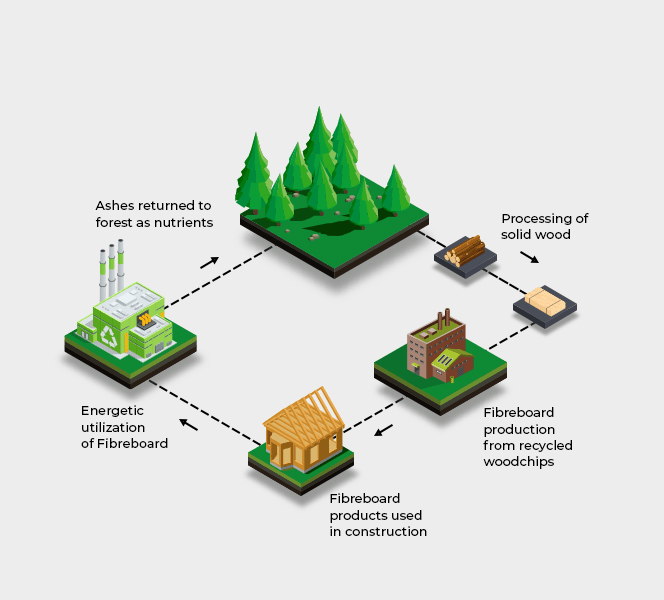
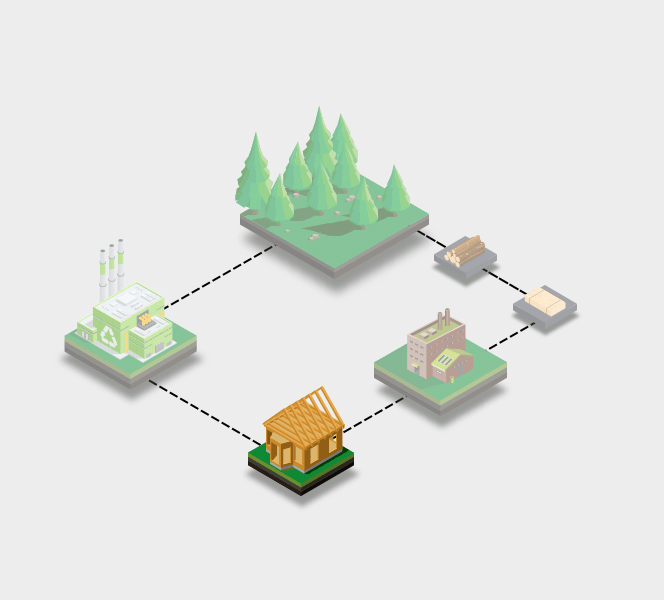
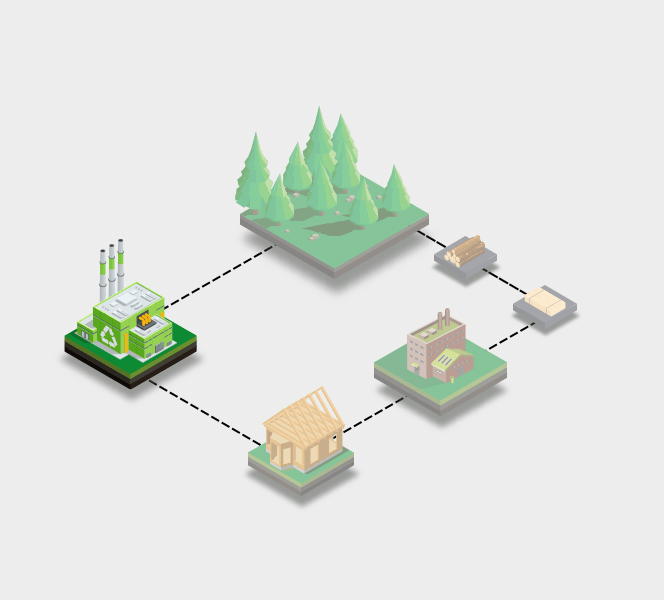
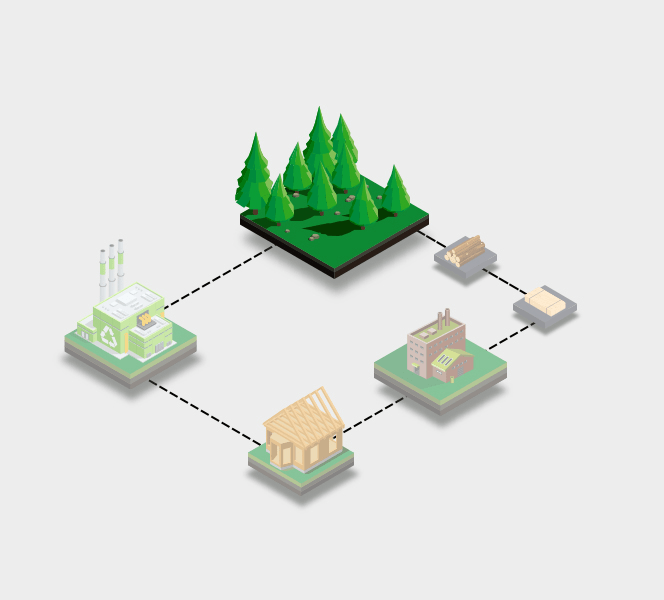
The life cycle of natural wood fibreboards highlights sustainability, making it a responsible and versatile material of choice for the construction, interior solutions, and industrial packing industries on account of its renewable sourcing, eco-friendly manufacturing, recyclability, and potential energy recovery.
Fiberboard Life Cycle Assessment (LCA)
Raw Material Sourcing
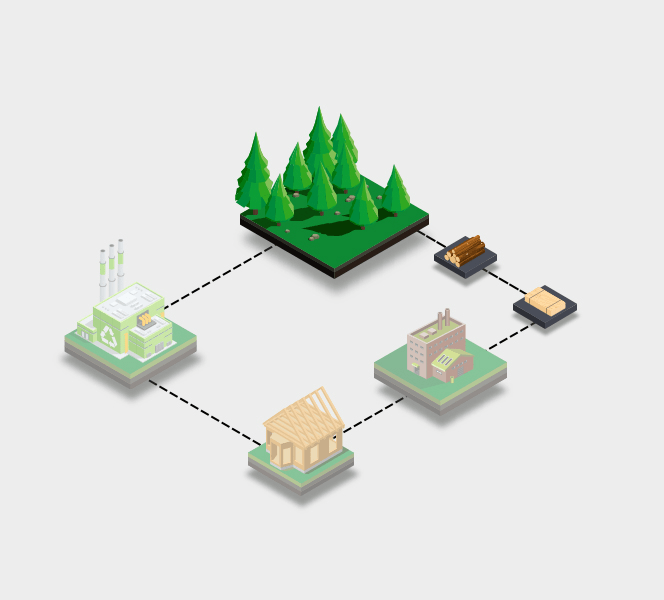
Our timber is sourced from sustainably managed Nordic European forests, emphasizing renewable resources and responsible harvesting practices.
Fiberboard Life Cycle Assessment (LCA)
Manufacturing
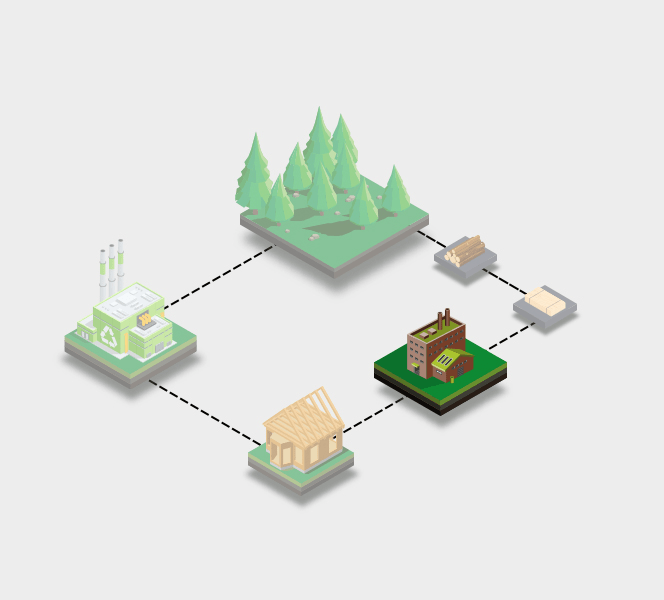
Timber materials are processed using a wet method, with natural lignin as a binder, completely eliminating the need for synthetic chemicals or adhesives.
Fiberboard Life Cycle Assessment (LCA)
Use Phase
Natural wood fibreboards provide durability in applications like construction and interior solutions, requiring minimal maintenance while enhancing functionality and aesthetics.
Fiberboard Life Cycle Assessment (LCA)
End-of-Life
Natural wood fibreboards can be recycled or repurposed, supporting a circular economy and reducing waste.
Fiberboard Life Cycle Assessment (LCA)
Energetical Utilisation & Disposal
If recycling isn’t possible, natural wood fibreboards can be used for energy recovery through incineration, producing bioenergy. Alternatively, their natural wood fibres decompose naturally, lowering environmental impact.
CO2 benefits
Reducing carbon footprints in the process
Natural wood fibreboards offer a significant potential in reducing carbon footprints and contributing to CO2 sequestration. The use of renewable wood resources, energy-efficient production methods, and ability to act as a carbon sink (Embodied carbon) throughout its life cycle make natural wood fibreboards a sustainable material of choice for construction and other industries.
Additionally, the insulating properties of natural woodfibre softboards help lower the building energy consumption (Operational carbon), further supporting global efforts to reduce carbon emissions.